BACS from 2026: from obligation to advantage (with BACS Class A)
Energy management regulations are being tightened. From January 1, 2026, large non-residential buildings must be equipped with a Building Automation and Control System (BACS).
In 2030, the requirement will extend to smaller systems. In this blog, we explain what BACS is, when it applies, and how to implement it effectively. We also show how Entune BuildingAI helps you not only comply with the regulations but also gain a competitive advantage from them.
Entune BuildingAI also helps you achieve BACS Class A, so you can immediately aim for the highest performance standard.
What exactly is BACS?
BACS is established in Europe under the EPBD and requires active energy management rather than just measuring and reporting. In short: your building measures, analyzes, and adjusts itself. The standard refers to EN ISO 52120, the standard for functions and performance levels of building automation.
A BACS must at a minimum:
- Monitor and store consumption
- Detect and report inefficiencies
- Automatically control installations
- Be interoperable with different systems according to EN ISO 52120
- And in the 2024 revision, monitoring indoor environmental quality was identified as a new capability.
When does the obligation apply?
Since 1 January 2026: for buildings with heating or cooling systems > 290 kW
From 1 January 2030: for buildings with systems > 70 kW
These obligations are anchored in the Netherlands in the Building Environment Decree and developed by RVO.
Tip: there are related EPBD requirements, such as automatic lighting control after 2028 and 2030 for the same power classes. Include these in your planning. (
RVO.nl)
Why was this introduced? The goals are clear: lower CO₂ emissions, better utilization of the grid, and less energy waste. For organizations, it provides not only compliance but, more importantly, fewer unexpected costs and greater control over installations.
BACS and EMS: how they work together
Many organizations use or are considering an Energy Management System (EMS). This is not a replacement for BACS, but a complement:
- BACS focuses on building-related functions: heating, cooling, ventilation, lighting, solar shading
- EMS controls energy assets that interact with the grid: batteries, PV, EV charging points, CHP
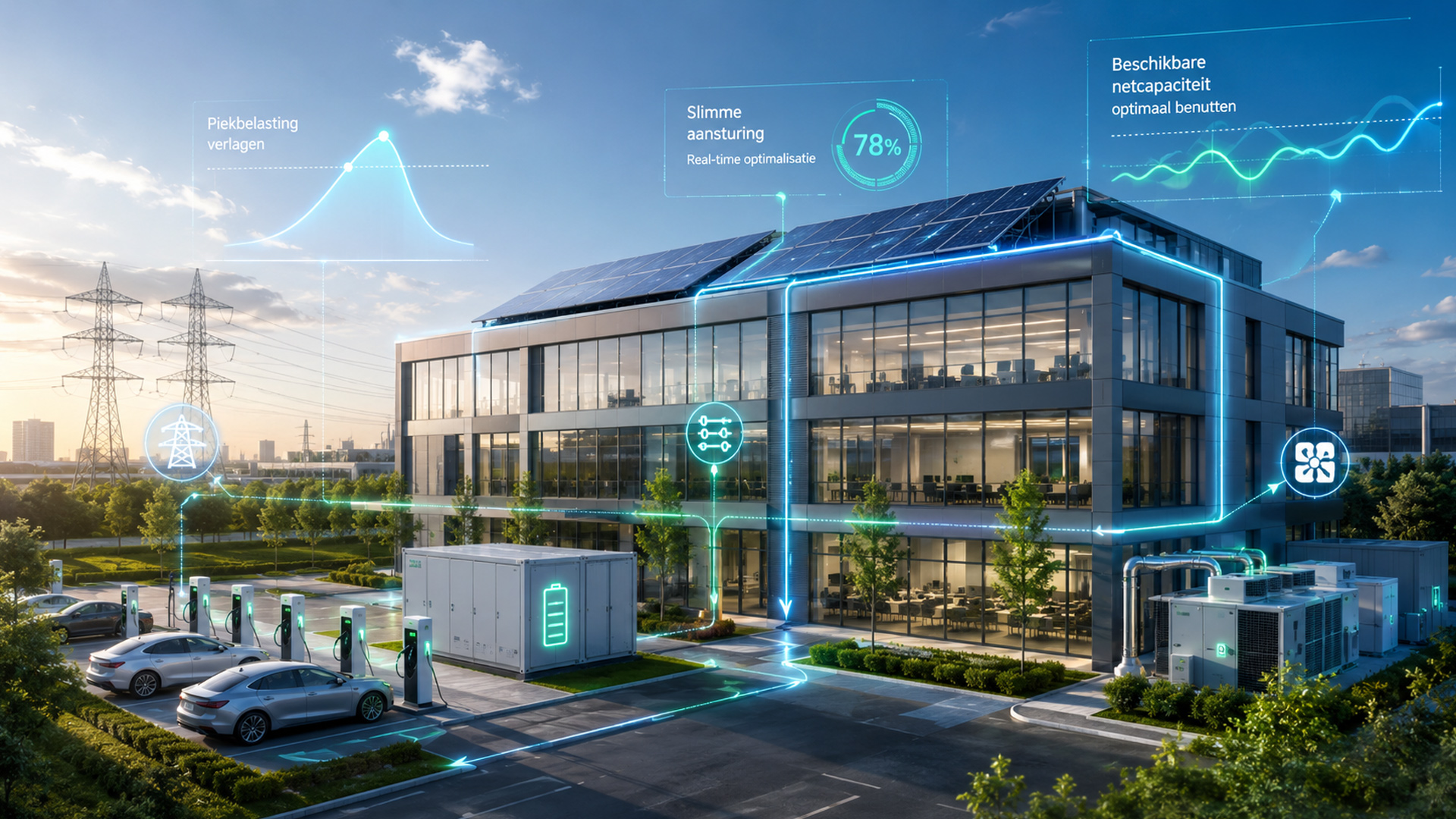
Integration prevents conflicting controls and balances comfort, costs, and grid load.
What does this mean in practical terms for your organization?
Do not view BACS as just a separate device, but as an integrated approach:
-Inventory your HVAC, ventilation, lighting, and solar shading
-Check whether your current BMS/BAS already offers features that align with EN ISO 52120
-Determine which upgrades and connections are required
-Plan integration with your EMS to avoid peak loads and intelligently utilize your own energy generation
Good to know: when you can demonstrate that your installations are controlled by a compliant BACS, the periodic EPBD inspection for those systems may be waived. This saves time and reduces administrative burden. Always verify this for your specific building type and installation.
How does Entune help?
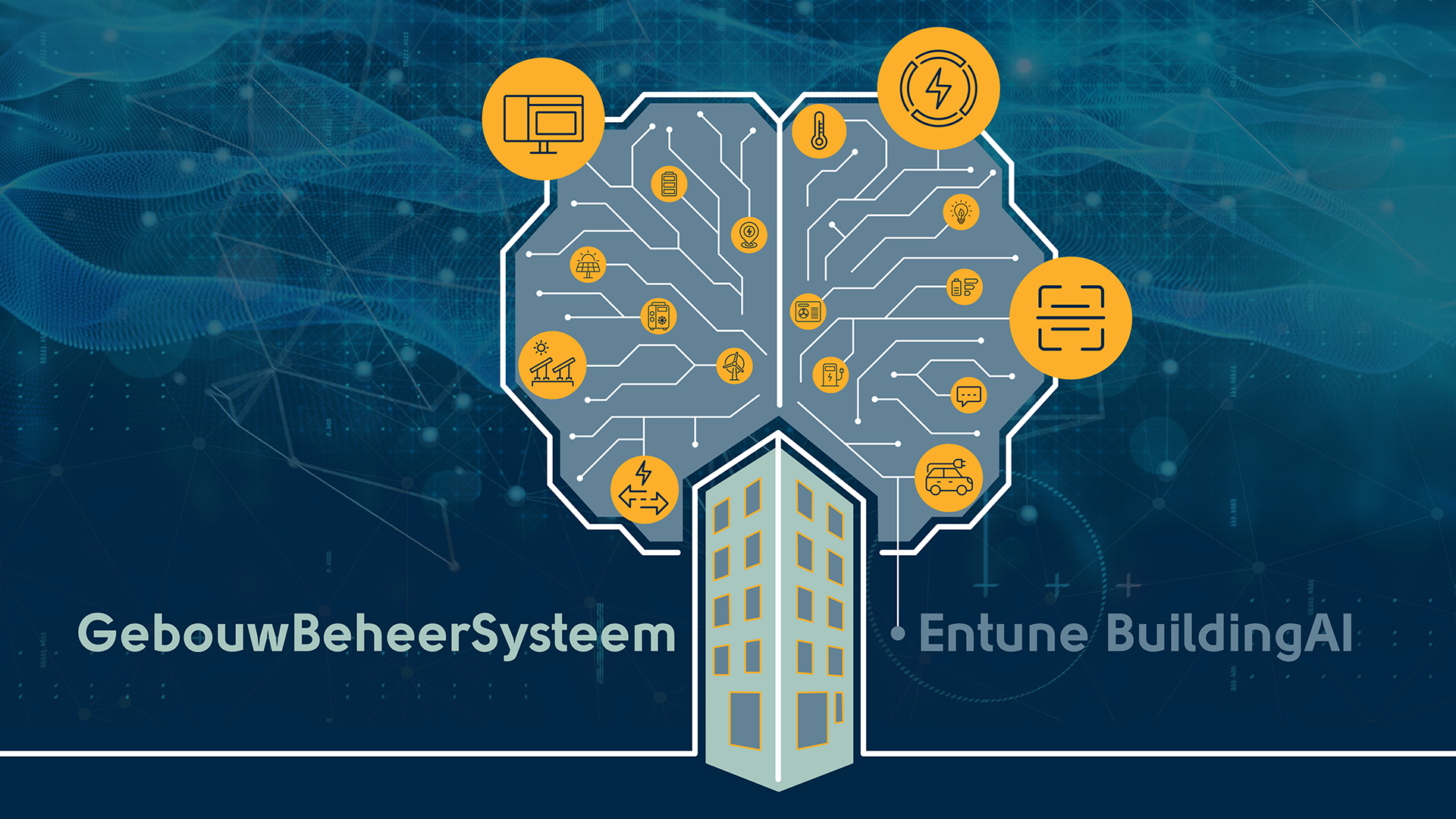
Entune BuildingAI works on top of existing building and energy systems. The platform consists of modules that reinforce one another:
- Scan: a building analysis that maps out what is currently in place, where waste occurs, and which steps lead to BACS readiness
-Optimizer: a self-learning controller that sends out optimal setpoints every 15 minutes for comfort and energy, without sacrificing comfort
- Co-Operator: a clear interface for managers and users with status, insights, and actions
Together, they provide you with:
-Quick baseline assessment towards EN ISO 52120 functions
-Automatic optimization based on data
-One overview for performance, deviations, and follow-up
-Simple integration with your EMS and energy market solutions
Checklist: start today:
- Do your systems fall above 290 kW, or above 70 kW starting in 2030?
- Can your existing BMS/BMS be expanded to include EN ISO 52120 functions?
- Have you taken an integrated look at HVAC, ventilation, lighting, and solar shading?
- Is EMS integration on the roadmap to balance comfort and grid load?
- Can you demonstrate to your supplier that the BACS meets EPBD requirements?
Setting things up correctly now means benefiting from lower energy consumption, reduced costs, and greater operational peace of mind. With Entune BuildingAI, you turn BACS into a competitive advantage: compliant, insightful, and future-ready, with a clear roadmap to achieving BACS Class A.
Curious about the current status of your locations and what steps are needed? Schedule a brief exploration with Entune. We are happy to help you think through a pragmatic route to BACS readiness, with demonstrable results.
Feel free to get in touch:Dick Timmermans - Business Lead
dick.timmermans@entune.nl
+31 6 3084 9717
www.entune.nl