Congestion management: how to use available grid capacity more smartly
Grid congestion is becoming a direct limitation for more and more organizations. New connections are taking longer, increasing contracted capacity is not always possible, and sustainability plans are coming under pressure. At the same time, the energy demand of buildings is increasing due to electrification, heat pumps, solar panels, batteries, and charging points.
This requires a different way of looking at energy use.
Not just: how much energy are we using?
But above all: when are we using energy, how much space is available on the grid, and how do we prevent exceeding our limits during peak moments?
That is where congestion management comes in. In this blog, we explain what congestion management is, how it works, and why smart control in buildings is becoming increasingly important.
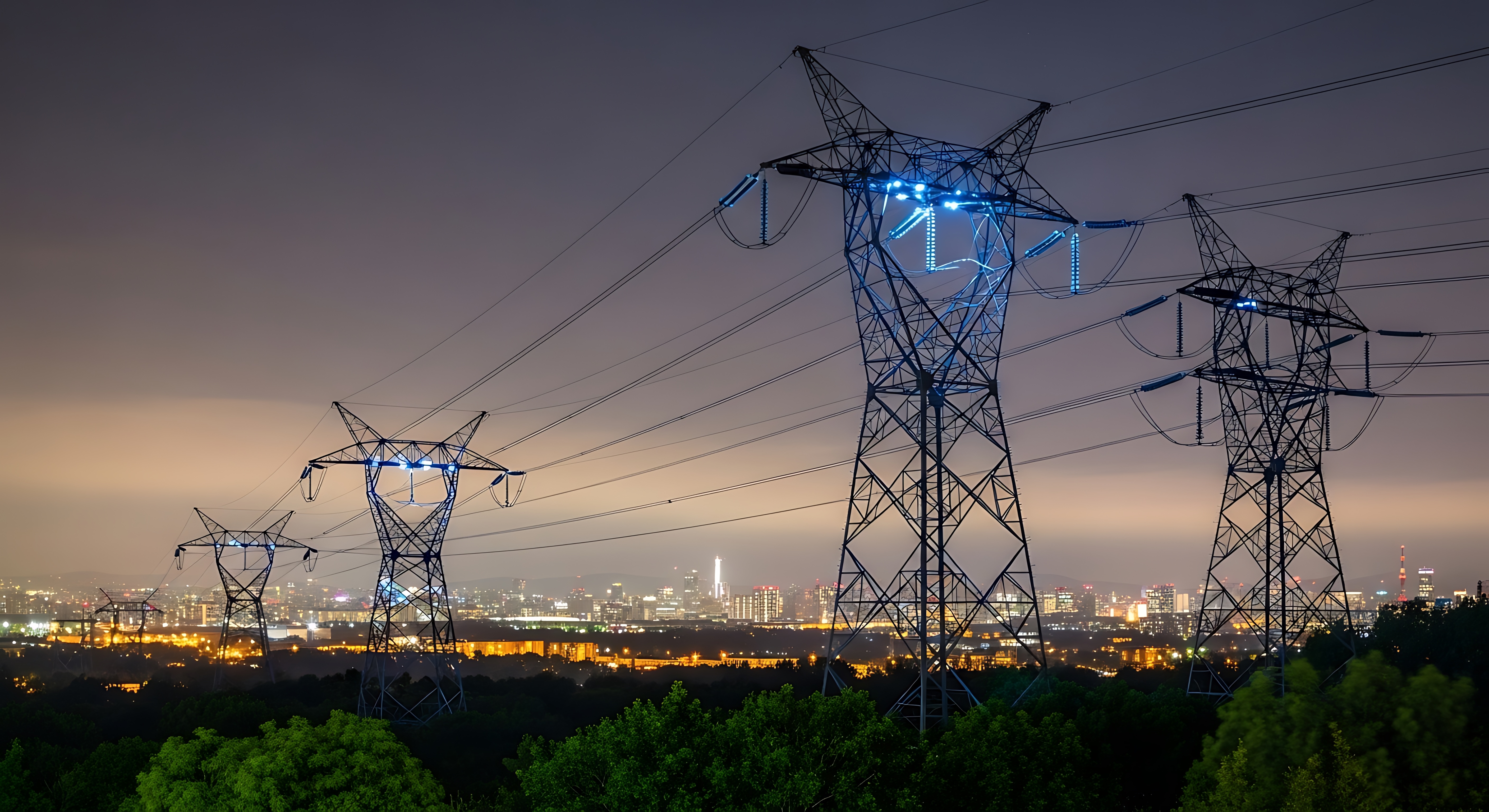
What is congestion management?
Congestion management is the active control of electricity consumption or feed-in to prevent overloading the power grid. It is often compared to avoiding rush hour on the road. If everyone hits the road at the same time, traffic jams occur. If traffic is better distributed, the same infrastructure can be used more efficiently.
The electricity grid works in a similar way.
At certain times, the demand for electricity is higher than what the local or regional grid can handle. This can involve consumption, for example, when many buildings are heating, cooling, or charging simultaneously. However, it can also involve feed-in, for example, when many solar panels are producing power at the same time.
Congestion management helps to limit these peaks. This can be done by temporarily reducing power consumption, lowering the amount of power fed back into the grid, storing energy, or shifting energy usage to a time when there is more capacity available.
Why is congestion management necessary?
The electricity grid is under more strain than ever before. Buildings are switching from gas to electricity, companies are installing charging stations, solar panels are feeding power back into the local grid, and installations are becoming increasingly smarter and more energy-intensive.
Grid operators are investing heavily in expanding the network, but this takes time. Permits are required, space is scarce, and implementation requires significant manpower and materials. As a result, more and more areas are experiencing periods where the demand for transport capacity exceeds what the grid can handle.
For organizations, this can have tangible consequences:
- A new or upgraded connection is not immediately available
- Sustainability plans are being delayed
- Additional charging stations or heat pumps do not fit within existing capacity
- Solar energy cannot always be fully fed back into the grid
- Peak loads lead to higher costs or operational limitations
Congestion management is therefore not just a temporary technical measure on the fringes of the energy system. It is becoming a structural part of how organizations manage their energy.
How does congestion management work in practice?
Congestion management starts with insight. An organization needs to know where, when, and why peaks occur. Only then can it be determined which energy processes are flexible and which are not.
In buildings, this often involves the following components:
- Heating, cooling, and ventilation
- Charging stations for electric vehicles
- Solar panels
- Batteries
- Heat pumps
- Building-related installations
- Production or business processes
- Lighting and other electrical consumers
Not everything can simply be switched off. Comfort, safety, and business continuity remain essential. A school, office, healthcare facility, or production environment cannot just turn off its systems when the grid reaches capacity.
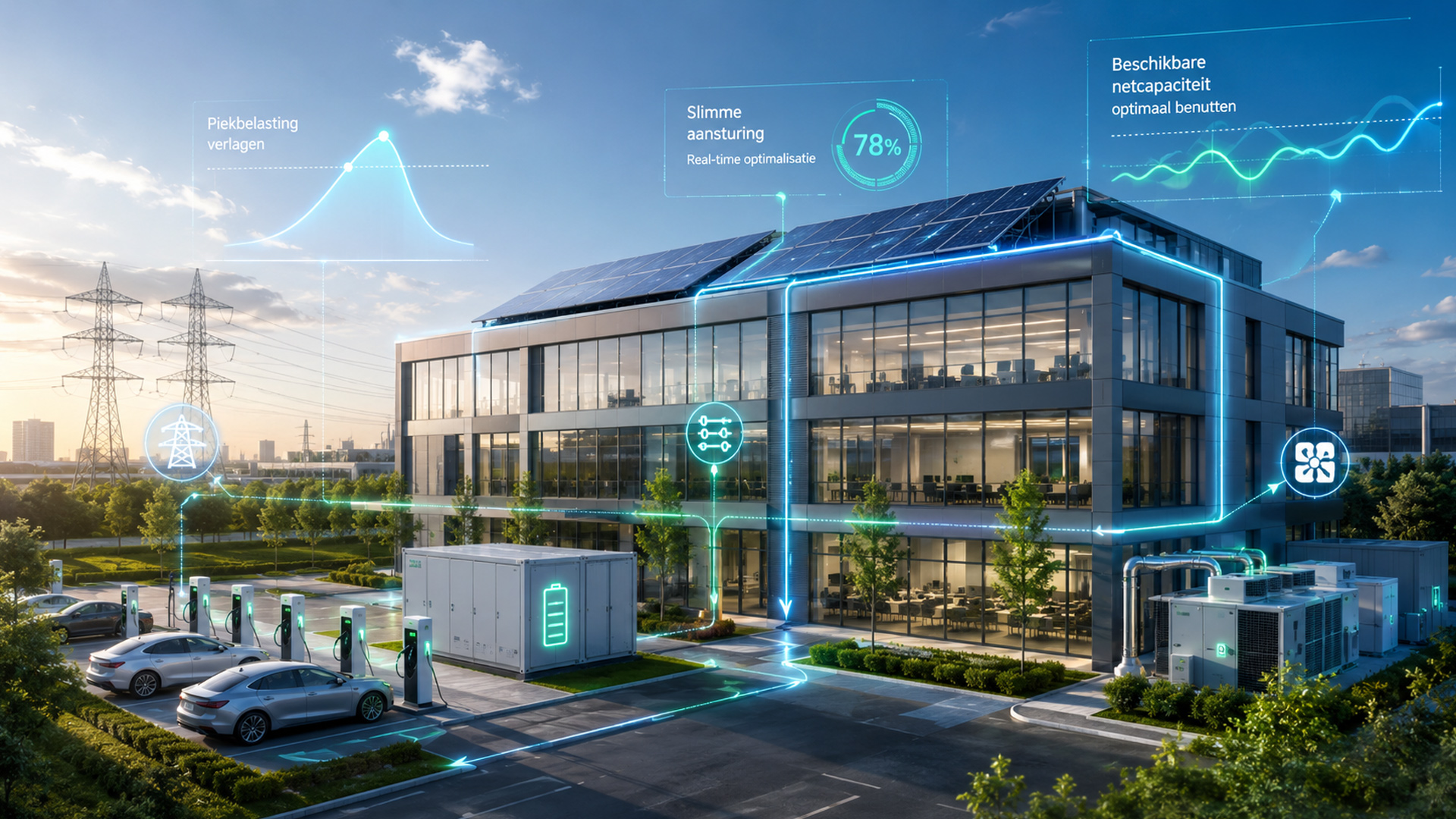
That is why effective congestion management is not about shutting things down, but about smart control. For example, a building can be pre-heated or pre-cooled, allowing the heat pump to draw less power later on. Charging stations can temporarily reduce their charging speed when peak demand rises. A battery can be used to absorb a peak. And solar panels can be better utilized locally instead of feeding everything back into the grid immediately.
Congestion management versus energy management
Congestion management and energy management are often mentioned in the same breath, but they are not the same thing.
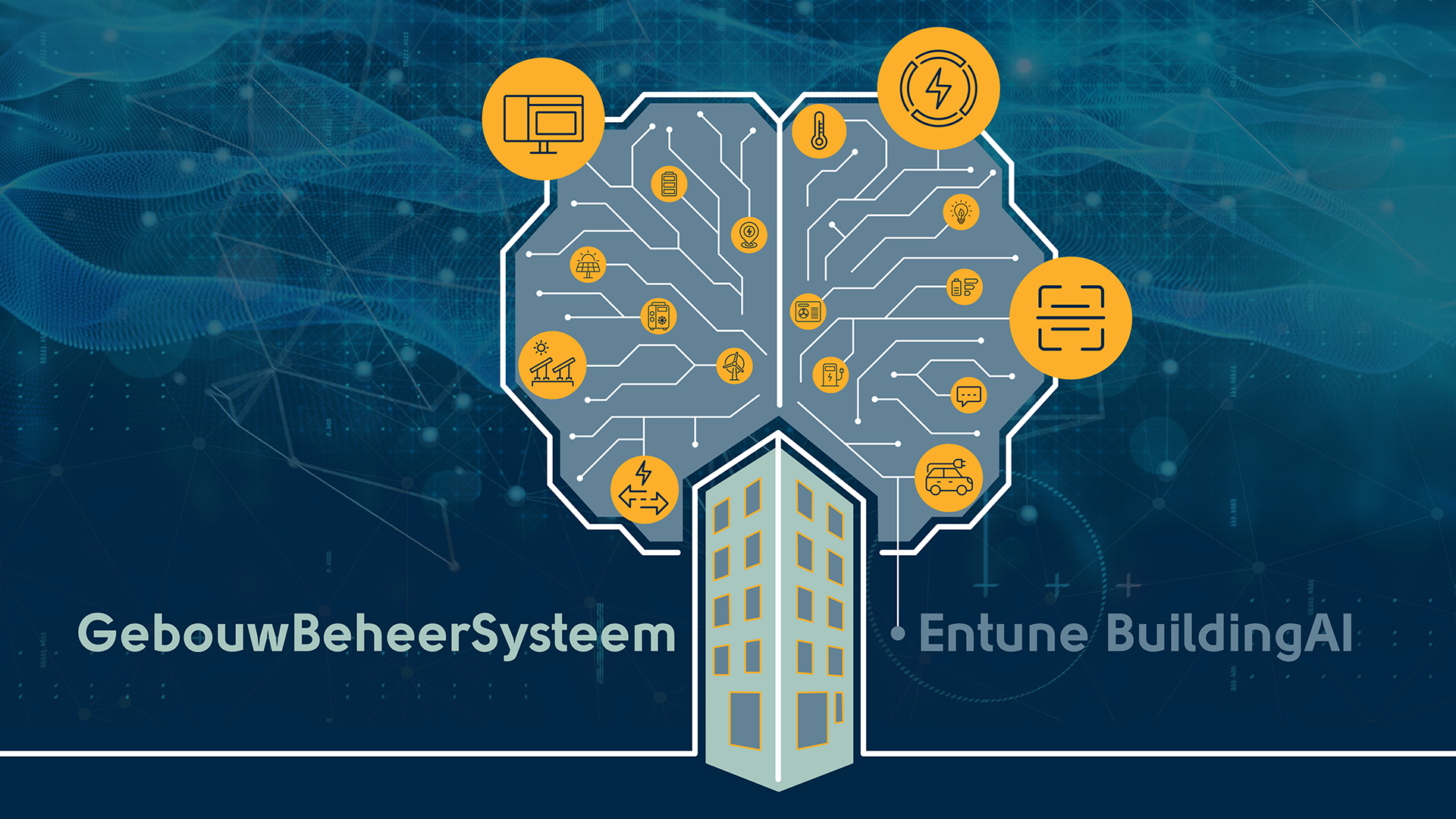
An Energy Management System, or EMS, focuses on monitoring, analyzing, and controlling energy flows. This includes generation, storage, consumption, charging points, and batteries. The goal is to use energy more efficiently, reduce costs, and respond better to tariffs or availability.
Congestion management is more specific. It focuses on preventing or limiting overloading of the electricity grid. The central question is not just how to use energy as efficiently as possible, but also how to keep the building within the available grid capacity.
In practice, the two reinforce each other. An EMS provides insight and controls energy assets. Congestion management adds a clear boundary to that: how much power is allowed or can be used or fed back at any given moment?
Why buildings play an important role
Buildings are often viewed as passive energy consumers. They require electricity for lighting, heating, cooling, ventilation, and equipment. However, modern buildings are much more than that.
They generate energy with solar panels, charge electric vehicles, store energy in batteries, and contain systems that can be controlled flexibly. A building's thermal mass also plays a role. A building can temporarily retain heat or cold, allowing energy usage to be shifted over time without users noticing any immediate difference.
That makes buildings interesting for congestion management.
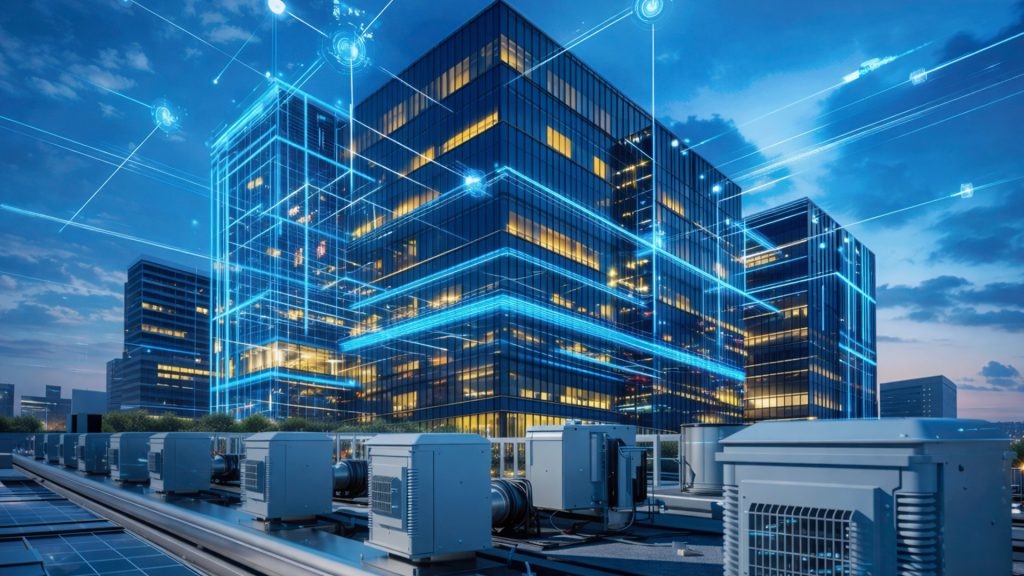
When buildings are managed more intelligently, they can reduce peaks, time energy usage better, and handle available grid capacity more flexibly. Not by sacrificing comfort, but by looking ahead.
For example:
- Pre-heating a building when there is sufficient grid capacity or solar energy available
- Temporarily reducing cooling without losing comfort
- Dynamically controlling charging points based on current building consumption
- Using batteries to flatten peaks and integrating HVAC systems with energy management
- Better aligning generation, storage, and consumption
This is how a building transforms from a fixed energy consumer into a flexible part of the energy system.
What are the benefits of congestion management?
The benefits of congestion management vary by location, connection, and building type. Nevertheless, there are clear advantages that are relevant to many organizations.
1. More control over peak load
By actively managing energy usage, it becomes clear where peaks occur and how they can be limited. This helps to stay within the contracted capacity and prevents systems from unintentionally reinforcing each other's load.
2. Better utilization of existing connection capacity
Not every organization can immediately obtain a larger connection. Smart management helps to do more with the capacity that is already available. This can enable sustainability plans, even when expanding the connection is not yet feasible.
3. Less delay in electrification
Heat pumps, charging points, and electrical installations require significant power. Congestion management helps to better integrate these assets into a building's existing energy system.
4. Lower energy costs
Peak loads and unfavorable timing can increase costs. By shifting energy usage to more favorable times and preventing unnecessary peaks, you gain more control over your energy bill.
5. Better preparation for a flexible energy system
The energy market is becoming more dynamic. Buildings that can already manage timing, capacity, and flexibility are better prepared for future contract types, dynamic pricing, and local energy collaborations.
What role does automation play?
Congestion management is difficult to organize manually. Energy usage changes constantly. The weather, occupancy, outdoor temperature, solar energy availability, and user charging behavior vary from day to day.
That is why automation is essential.
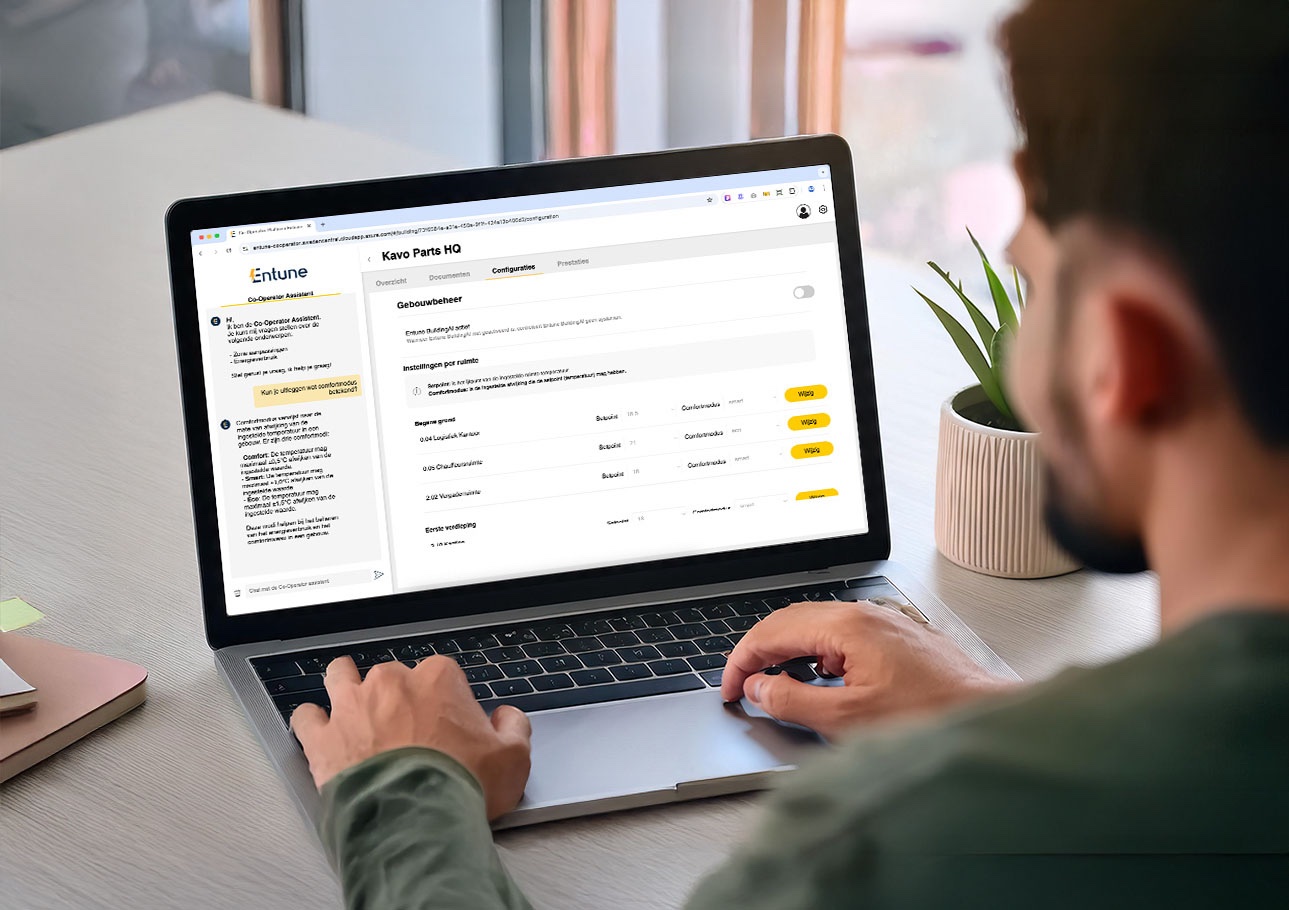
A smart system can collect data, make forecasts, and continuously determine which control strategy best fits the situation. In doing so, it must balance multiple goals simultaneously:
- Staying within available grid capacity
- Maintaining comfort
- Reducing energy consumption
- Lowering costs and ensuring installations run safely and reliably
- Maximizing the use of local generation
The challenge lies primarily in the coherence. A charging plaza, battery, heat pump, and building management system can all be smart individually. But if they don't work together, peaks or conflicting controls will still occur.
True congestion management therefore requires coordination between the building, energy assets, and grid capacity.
Where do you start as an organization?
For organizations dealing with grid congestion or peak loads, it is important to start in a structured way.
A practical approach consists of five steps:
1. Map out your current connection and contract capacity
Know how much power you are allowed to draw or feed back and where the limits lie. Do not just look at average consumption, but focus primarily on the peaks.
2. Analyze when peaks occur
Investigate at what times the highest load occurs. Is this caused by HVAC, charging points, production, simultaneous usage, or solar panel feed-in?
3. Determine which processes are flexible
Not every process can be shifted. Distinguish between critical processes and those that can be temporarily adjusted without impacting comfort or business operations.
4. Link building data and energy data
Congestion management works better when energy consumption is not viewed in isolation from building behavior. Occupancy, temperature, installations, and energy assets all influence one another.
5. Automate control
Manual adjustment is vulnerable and reactive. Automated control makes it possible to look ahead and make adjustments in time.
Would you like to know more about congestion management, peak load, or smart control of building installations within the available grid capacity?
Feel free to get in touch:
Dick Timmermans - Business Lead
dick.timmermans@entune.nl
+31 6 3084 9717
www.entune.nl